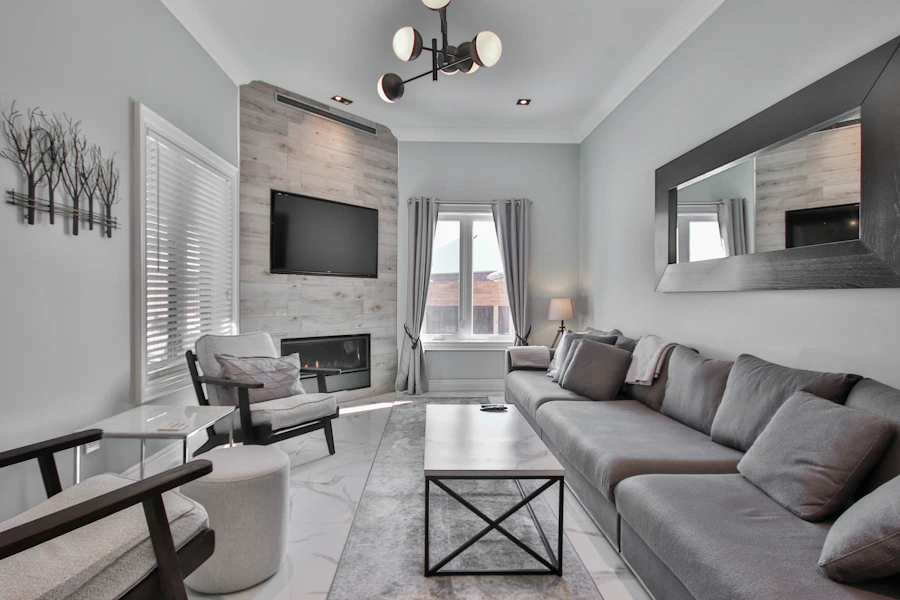
Over the years, we've helped hundreds of clients transform their spaces from well-furnished to truly considered. The difference is rarely about budget. It's about approach. The principles below guide our work and, if you're inclined to apply them yourself, they'll serve you well regardless of what you're working with.
Start With the Room, Not the Furniture
The most common mistake in high-end interiors is buying beautiful pieces that fight the architecture rather than complement it. Before selecting a single item, spend time in the empty room. Notice where the light falls at different times of day. Observe the proportions: ceiling height, wall lengths, the relationship between windows and floor space.
A room with generous ceiling height can carry taller furniture and vertical artwork. A room with lower ceilings benefits from horizontal lines and pieces that sit closer to the ground. These are simple principles, but ignoring them is what makes even expensive rooms feel slightly wrong.
The Rule of Materials
Luxury interiors tend to limit themselves to three or four primary materials and repeat them throughout the space. This creates coherence without monotony. A room might be built around walnut, brass, linen and marble, with each material appearing in multiple forms: walnut in the dining table and sideboard, brass in the lighting and accessories, linen on the sofa and curtains, marble on the coffee table and a pair of bookends.
When everything relates to everything else, a room stops being a collection of objects and becomes a composition.
The key is variation within the constraint. Different textures of the same material (polished brass versus patinated brass, raw linen versus washed linen) add depth without introducing visual noise.
Lighting in Layers
No single light source can do justice to a room. Luxury spaces typically employ at least three layers:
- Ambient lighting — the base layer. Recessed ceiling spots, cove lighting, or large pendants that wash the room with even, warm light.
- Task lighting — reading lamps, desk lights, under-cabinet strips. Functional and focused.
- Accent lighting — picture lights, table lamps, candles. These create atmosphere and draw the eye to specific objects or areas.
The most sophisticated interiors rely heavily on dimmers. A room that's fully lit for a morning meeting should feel entirely different when lowered for an evening dinner, even though nothing has physically moved.
The Value of Negative Space
Perhaps the most counterintuitive principle: luxury often means less. A sideboard looks more expensive when it holds three carefully chosen objects than when it's covered in twenty. A wall feels more intentional with a single large artwork than a salon hang of mixed frames. Space around an object is what gives it presence.
This is where many interiors go wrong after an initial burst of purchasing. The temptation to keep adding is strong, but restraint is what separates a considered home from a showroom.
Investing in the Right Pieces
Not everything in a room needs to be expensive. What matters is that the pieces which anchor the space, the sofa, the dining table, the primary lighting, are built to the highest standard. These are the items you interact with daily, and their quality announces itself through touch and use rather than branding.
Secondary pieces (side tables, small accessories, soft furnishings) can be more modest. The contrast often makes the investment pieces feel even more special.
Working With Us
If this approach resonates and you'd like guidance applying it to your own space, we offer complimentary styling consultations for clients purchasing key pieces from our collection. It's an informal conversation, not a hard sell. We'll look at your space, listen to how you live in it, and suggest pieces that will genuinely improve your daily experience of home.
Book a Consultation